


Jul 13, 2026
You've probably heard the term eSIM while shopping for a new smartphone or planning an international trip.
Maybe your airline recommended using one. Maybe a travel influencer mentioned activating an eSIM before landing. Or perhaps your phone prompted you to "Add an eSIM" and left you wondering what that actually means.
If you're asking questions like:
You're not alone.
As smartphones become smarter and travel becomes increasingly digital, eSIM technology is quickly replacing the traditional plastic SIM card that we've all been using for decades.
The best part? Once you understand how it works, you'll wonder why switching mobile networks ever required tiny plastic cards in the first place.
In this guide, we'll explain everything you need to know about eSIMs in simple language—how they work, their advantages, compatibility, common myths, and why millions of travellers are making the switch.
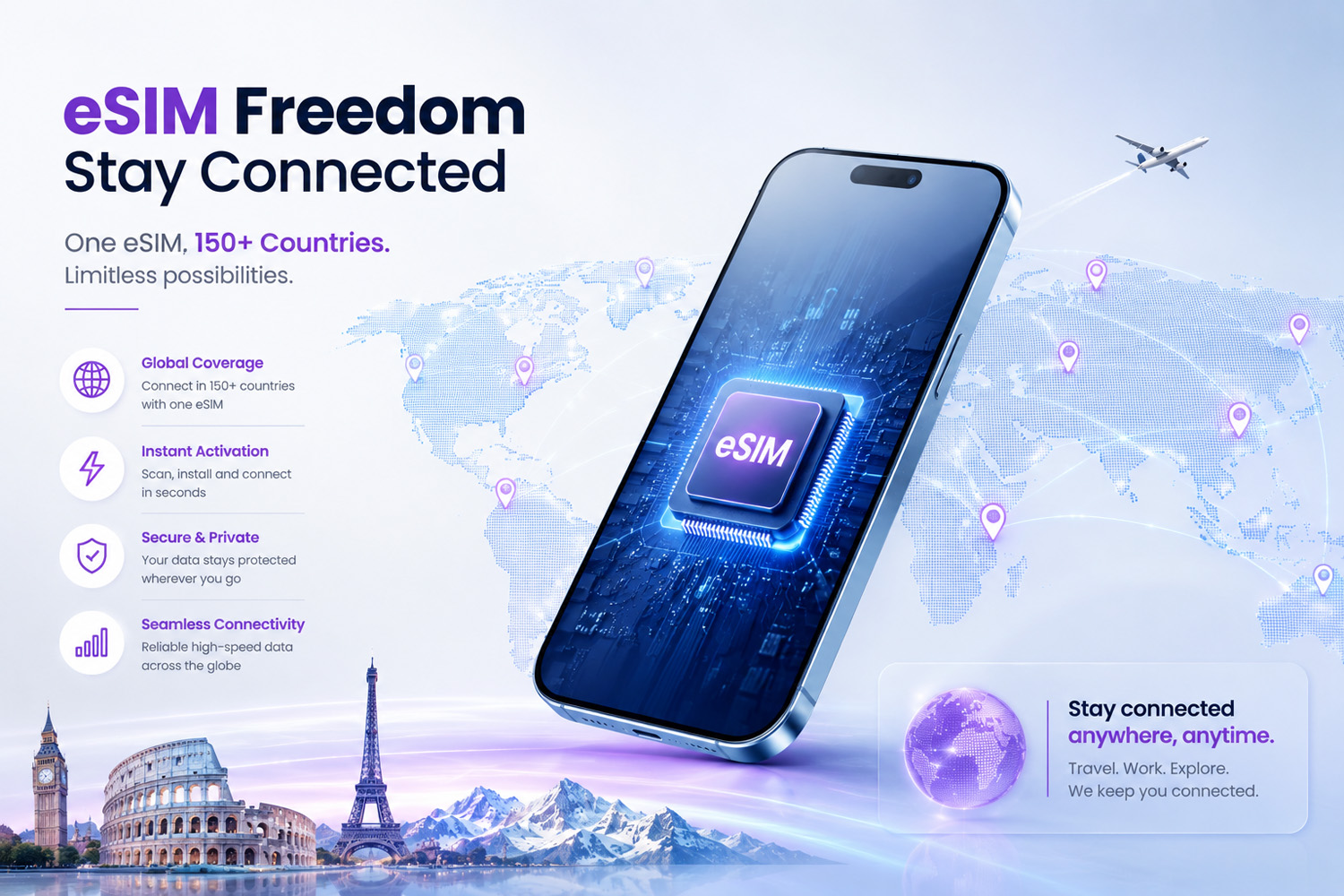
An eSIM, short for Embedded Subscriber Identity Module, is a digital SIM that is built directly into your smartphone, tablet, smartwatch, or other compatible device.
Unlike a traditional SIM card, there's nothing to insert or remove.
Instead of swapping physical cards, your phone downloads a secure mobile profile that connects you to a mobile network.
Think of it like the difference between:
The purpose remains the same—but the experience becomes significantly faster, simpler, and more convenient.
With an eSIM, activating a mobile plan can take just a few minutes without visiting a store or waiting for a SIM card to be delivered.
At first glance, an eSIM may seem like complicated technology, but the process is surprisingly simple.
Here's what happens behind the scenes:
Once activated, your phone connects to the mobile network just like it would with a physical SIM card.
From that point on, you can browse the internet, use navigation apps, stream videos, send messages, and make calls (depending on your plan).
The only difference is that everything happens digitally.
Although both serve the same purpose, the experience of using them is very different.
different.
For everyday users, both options provide mobile connectivity. However, for travellers, professionals, and people who frequently switch networks, eSIMs offer far greater flexibility.
The traditional SIM card has served us well for decades, but it comes with limitations.
Think about how often people:
As devices became thinner, smarter, and more connected, manufacturers looked for a better solution.
The result was eSIM technology.
By embedding the SIM directly into the device, manufacturers could improve durability, save internal space, and make switching networks completely digital.
Today, eSIMs are widely supported across flagship smartphones and are becoming the standard for connected devices.
1. Instant Activation
One of the biggest advantages is speed.
Instead of waiting for a physical SIM card, you can purchase an eSIM online and activate it within minutes.
This is especially useful when travelling, as you can install your plan before boarding your flight and connect as soon as you land.
2. No Physical SIM to Lose
Anyone who's handled a traditional SIM card knows how tiny they are.
It's surprisingly easy to misplace one while switching networks or travelling.
Since an eSIM is built into your phone, there's nothing to lose, damage, or replace.
3. Keep Your Existing Number
Most modern smartphones support Dual SIM functionality, allowing you to use a physical SIM and an eSIM simultaneously.
This means you can:
Keep your primary number active for calls and banking OTPs.
Use an eSIM for affordable mobile data.
Avoid swapping SIM cards every time you travel.
For frequent travellers, this is one of the most valuable features.
4. Perfect for International Travel
Imagine flying from India to France, then travelling to Italy, Switzerland, Germany, and the Netherlands over two weeks.
With traditional SIM cards, you may need multiple local SIMs or pay expensive roaming charges.
An international eSIM allows you to stay connected across multiple destinations using a single digital plan.
No airport kiosks.
No paperwork.
No searching for local telecom stores.
5. Better Device Management
Many smartphones can store multiple eSIM profiles, making it easy to switch between personal, business, and travel plans whenever you need them.
Although only one or two profiles can usually be active at the same time (depending on your device), storing several plans gives you much more flexibility than carrying physical SIM cards.
6. Environmentally Friendly
Traditional SIM cards involve plastic manufacturing, packaging, shipping, and disposal.
eSIMs remove much of this waste because everything is delivered digitally.
While the environmental impact of a single SIM card may seem small, millions of digital activations contribute to reducing plastic consumption globally.
One of the biggest misconceptions is that eSIMs are only for business travellers or technology enthusiasts.
In reality, they're suitable for almost everyone.
Frequent Travellers
Avoid roaming charges and activate a travel plan before departure.
Business Professionals
Stay connected across countries without interrupting work or changing your primary number.
Students Studying Abroad
Access local data plans quickly without navigating unfamiliar telecom stores.
Digital Nomads
Switch between countries with ease while maintaining reliable connectivity for work.
Families on Vacation
Parents can stay connected throughout the trip while avoiding unexpected roaming bills.
Many smartphones released over the last few years support eSIM technology.
Popular compatible devices include selected models from:
Compatibility depends on the specific model, region, and whether your device is carrier-unlocked.
Before purchasing an eSIM, always check your phone's specifications or consult your device manufacturer.
Yes.
In fact, many experts consider eSIM technology to be just as secure—if not more secure—than traditional SIM cards.
Because the SIM is embedded inside the device:
As with any mobile service, users should only purchase eSIMs from trusted providers and follow standard smartphone security practices such as screen locks and two-factor authentication.
Myth: eSIMs require an internet connection forever.
Reality: You need an internet connection only during installation. After activation, the eSIM works like any other mobile connection.
Myth: I can't use my regular SIM anymore.
Reality: Most compatible phones allow you to use both a physical SIM and an eSIM together.
Myth: eSIMs are only for international travel.
Reality: While travellers benefit greatly from eSIMs, they're also used for local mobile plans, business numbers, wearables, and secondary connections.
Myth: They're difficult to install.
Reality: For most users, installation involves scanning a QR code and following a few simple prompts on the screen.
Although eSIMs are useful in many situations, they truly shine when flexibility matters.
For example:
In each of these scenarios, an eSIM offers a smoother and more convenient experience than a traditional SIM.
The shift toward eSIM technology reflects a broader move toward digital-first experiences.
Just as boarding passes, banking, shopping, and entertainment have become increasingly digital, mobile connectivity is following the same path.
More smartphone manufacturers now include eSIM support as a standard feature, and mobile operators around the world continue expanding their eSIM offerings.
For consumers, this means greater flexibility, faster activation, and fewer barriers to staying connected—whether at home or abroad.
At GoLinko, we believe staying connected should be effortless.
Whether you're planning a business trip, a family holiday, a student exchange, or a multi-country adventure, GoLinko makes it easy to activate your mobile data before you even leave home.
Our digital eSIM plans are designed to eliminate the hassle of physical SIM cards, long activation queues, and expensive international roaming.
With instant delivery, straightforward setup, and reliable coverage across popular travel destinations, you can spend less time worrying about connectivity and more time enjoying your journey.
If this is your first experience with eSIM technology, you're already halfway there. The next step is simply choosing the plan that matches your destination and travel style.
The future of mobile connectivity is digital—and with GoLinko, it's ready whenever you are.
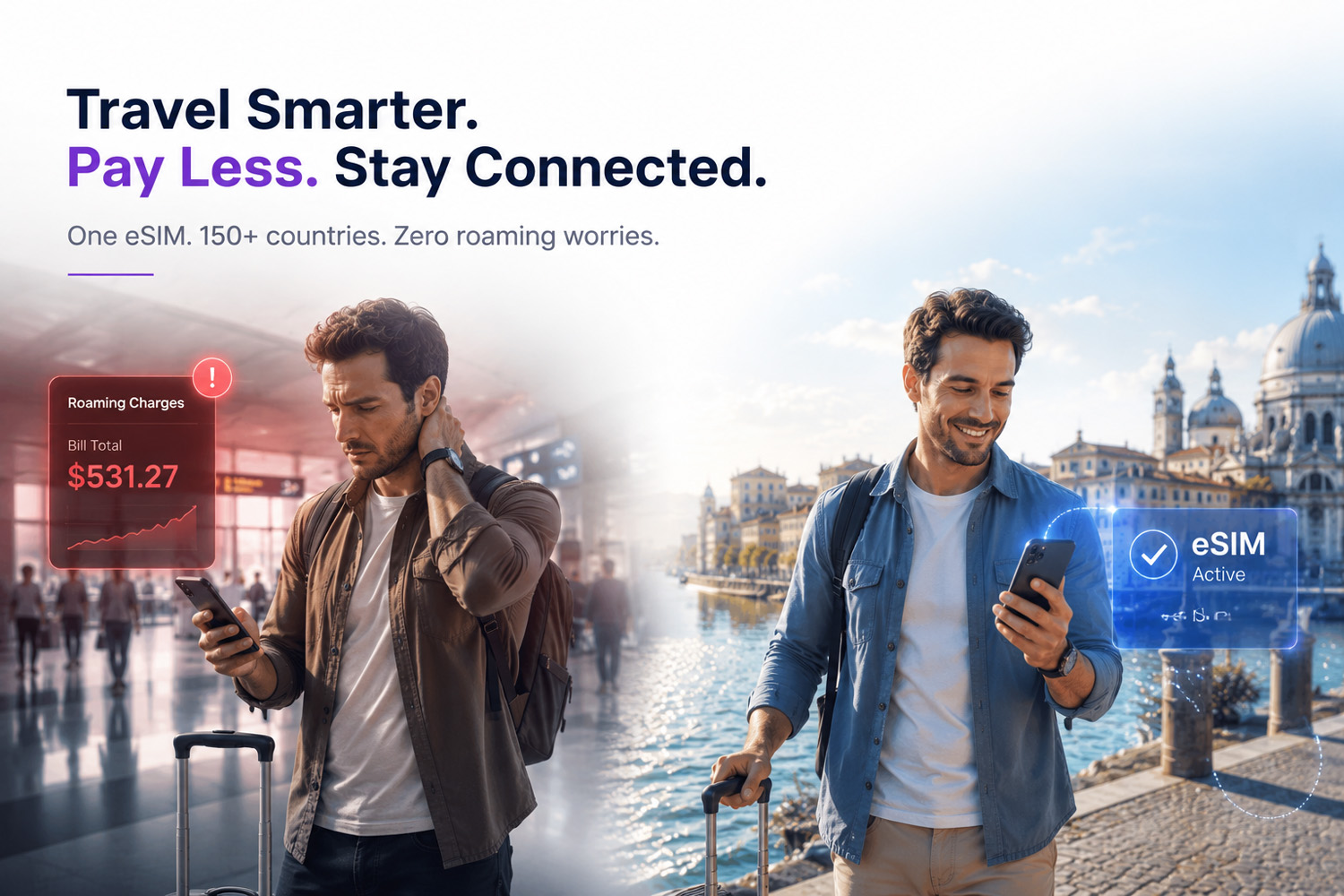
Compare eSIM and international roaming costs, convenience, speed, coverage, and flexibility. Find out which option is better for your next international trip.
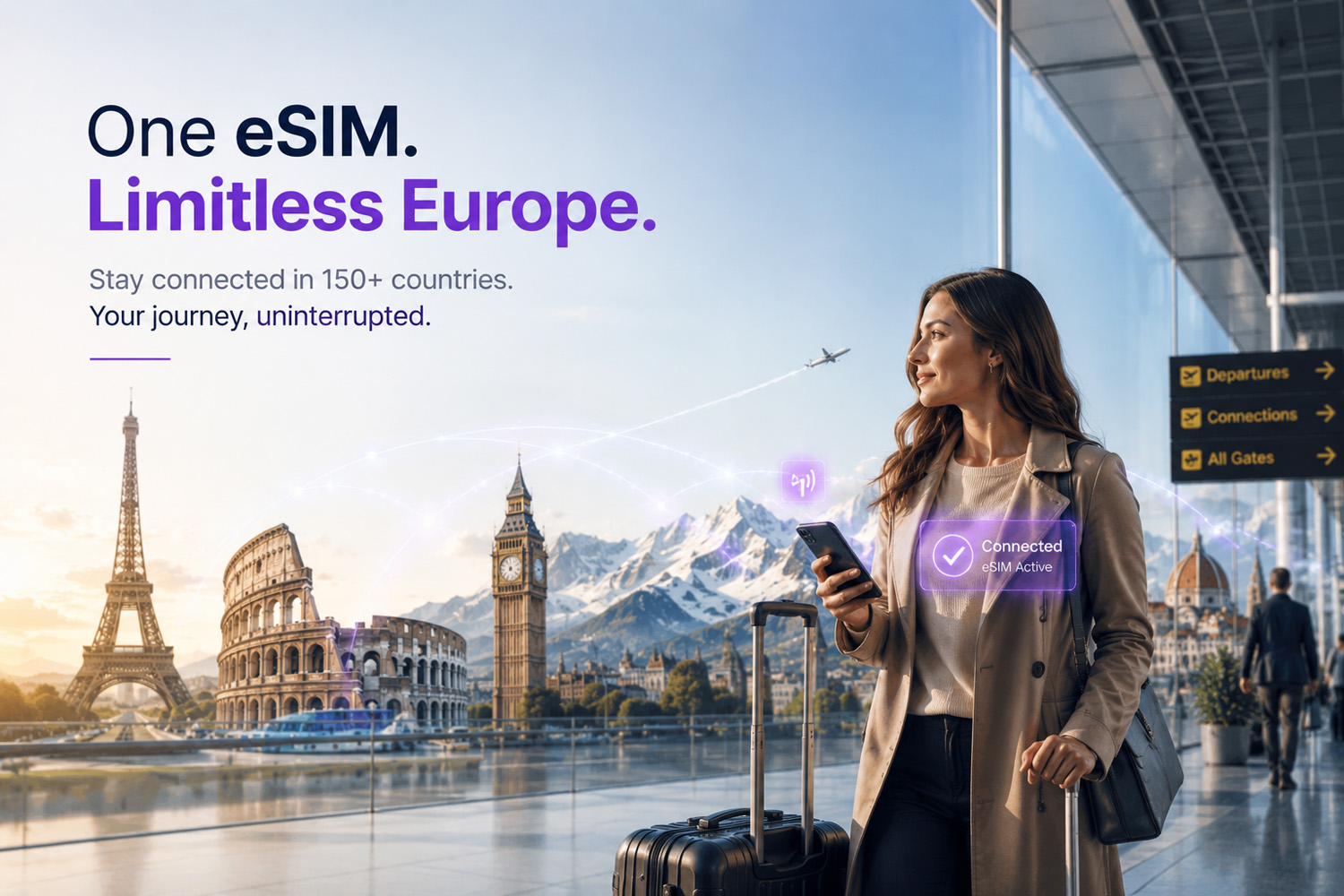
Planning a Europe trip? Discover how a Europe eSIM works, its benefits, supported countries, setup process, compatibility, and how to stay connected without expensive roaming charges.