


Jul 13, 2026
International travel has never been easier.
Booking flights takes minutes. Hotels can be reserved with a tap. Navigation, translations, payments, and even boarding passes now live on our smartphones.
Yet one question continues to confuse travellers before every international trip:
Should I activate my carrier's international roaming plan, or should I buy an eSIM?
For years, international roaming was the only convenient option. You simply landed in another country, switched on roaming, and continued using your phone.
The convenience came at a cost.
Unexpected bills, limited data allowances, slow speeds, and confusing pricing became common complaints among international travellers.
Today, eSIM technology offers a modern alternative. Instead of depending on your home carrier's roaming packages, you can connect directly to local partner networks through a digital SIM, often at a significantly lower cost.
But does that mean an eSIM is always the better choice?
Not necessarily.
The right option depends on how you travel, how much data you use, and whether you value convenience, flexibility, or keeping your existing number active.
In this guide, we'll compare eSIMs and international roaming across pricing, speed, convenience, coverage, security, and real-world travel scenarios to help you make the best decision for your next trip.

International roaming allows your mobile carrier to connect your phone to partner networks when you're outside your home country.
For example, if you're travelling from India to Italy, your Indian mobile operator partners with an Italian network to provide service.
From your perspective, everything feels familiar.
Your phone number remains the same.
Your contacts can still call or text you.
You don't need to install anything new.
However, your home carrier pays the overseas network for providing access—and those costs are often passed on to you through roaming packages or pay-per-use charges.
An eSIM (Embedded SIM) is a digital SIM profile that's built into your compatible smartphone.
Instead of relying on your home carrier's roaming agreements, you purchase a travel data plan digitally from an eSIM provider.
After scanning a QR code, your phone downloads the network profile, and once you arrive at your destination, it connects directly to local mobile operators.
There's no physical SIM card to swap, no airport kiosk to visit, and no waiting in line after a long flight.
Most importantly, you can install your eSIM before leaving home so that your mobile data is ready the moment you land.
While both options provide connectivity abroad, the experience—and often the overall value—can be very different.
For most travellers, cost is the biggest deciding factor.
International roaming packages are convenient, but they often come with limitations such as daily charges, restricted data allowances, or additional fees once your included usage is exhausted.
eSIM plans, on the other hand, are specifically designed for travellers. Since they connect to local networks, they can often provide more data at a lower price than traditional roaming packages.
If your trip involves frequent use of Google Maps, ride-hailing apps, social media, cloud storage, or video calls, a travel eSIM will generally offer much better value.
For travellers who use only a small amount of data during a very short trip, the convenience of an existing roaming plan may outweigh the potential savings.
Convenience Before and After Landing
One of the biggest advantages of an eSIM is that you can prepare everything before your journey begins.
Imagine landing in Paris, London, or Rome.
With an eSIM:
With roaming, the experience is also seamless—provided you've activated the correct package before travelling.
Without an active roaming plan, however, accidental usage can become expensive very quickly.
Both options are convenient, but an eSIM gives you more control over your costs.
Network Performance: Is One Faster?
Many travellers assume roaming automatically provides slower internet speeds.
In reality, network performance depends on several factors:
Since travel eSIMs often connect directly to major local operators, performance is generally comparable to using a local SIM card.
The experience is often excellent for browsing, navigation, messaging, streaming, and video conferencing.
This is one of the most common concerns.
The answer is yes.
Most modern smartphones support Dual SIM functionality, allowing you to:
This combination gives travellers the best of both worlds—continuity and cost savings.
Suppose you're travelling across Europe for two weeks.
Your itinerary includes:
Depending on your carrier, your roaming package may include all these countries—or it may require additional charges.
Many regional travel eSIM plans are specifically designed for multi-country travel, allowing you to move between destinations without changing SIM cards or purchasing additional plans.
For backpackers, business travellers, and holidaymakers exploring multiple countries, this flexibility is one of the strongest advantages of eSIM technology.
Both roaming and eSIMs are secure when used through reputable providers.
However, eSIMs eliminate some of the risks associated with physical SIM cards.
Since the SIM is embedded into your device:
As always, protect your phone with a passcode, biometric authentication, and two-factor authentication for important accounts.
Business Travellers
Reliable connectivity is essential for email, cloud documents, messaging platforms, and video meetings.
A travel eSIM provides generous data allowances while allowing professionals to keep their primary number active.
Holiday Travellers
Whether you're navigating unfamiliar streets, booking attractions, sharing photos, or searching for restaurants, consistent mobile data enhances every part of the journey.
A travel eSIM helps avoid worrying about unexpected roaming charges while staying connected throughout your trip.
Digital Nomads
Remote professionals often consume significant amounts of mobile data through video conferencing, cloud backups, collaboration tools, and hotspot usage.
For these travellers, a high-data eSIM plan usually offers the flexibility and value needed for extended stays.
Students Studying Abroad
Students arriving in a new country often need immediate internet access to arrange transport, contact accommodation providers, complete university registrations, and stay in touch with family.
Installing an eSIM before departure makes the transition much smoother.
Despite the growing popularity of eSIMs, roaming still has its place.
It may be the better option if:
For these situations, the simplicity of roaming may outweigh the additional expense.
An eSIM is often the smarter option if:
For most leisure travellers, professionals, and digital nomads, these advantages make eSIMs an increasingly popular choice.
Before your next international trip, ask yourself:
Answering these questions will help you select the connectivity option that best fits your travel style.
The way we travel has changed dramatically over the past decade.
Paper tickets have become digital boarding passes.
Cash has been replaced by contactless payments.
Travel guides now live inside smartphones.
Mobile connectivity is evolving in the same direction.
Instead of relying on plastic SIM cards and expensive roaming packages, travellers increasingly expect instant, digital access to reliable mobile networks wherever they go.
eSIM technology is helping make that expectation a reality.
MAt GoLinko, we believe staying connected abroad should be as seamless as booking your flight.
Our travel eSIMs are designed for modern travellers who value simplicity, transparency, and reliable connectivity without the stress of expensive roaming bills.
With instant digital delivery, easy activation, and plans covering popular destinations around the world, GoLinko helps you get online before you even leave home.
Whether you're heading to Europe, Asia, the Middle East, or beyond, you can choose a plan that matches your destination and travel style—then activate it in just a few minutes.
Travel confidently, stay connected, and spend less time worrying about mobile data.
Because your journey should begin the moment you land—not when you find a SIM card shop.
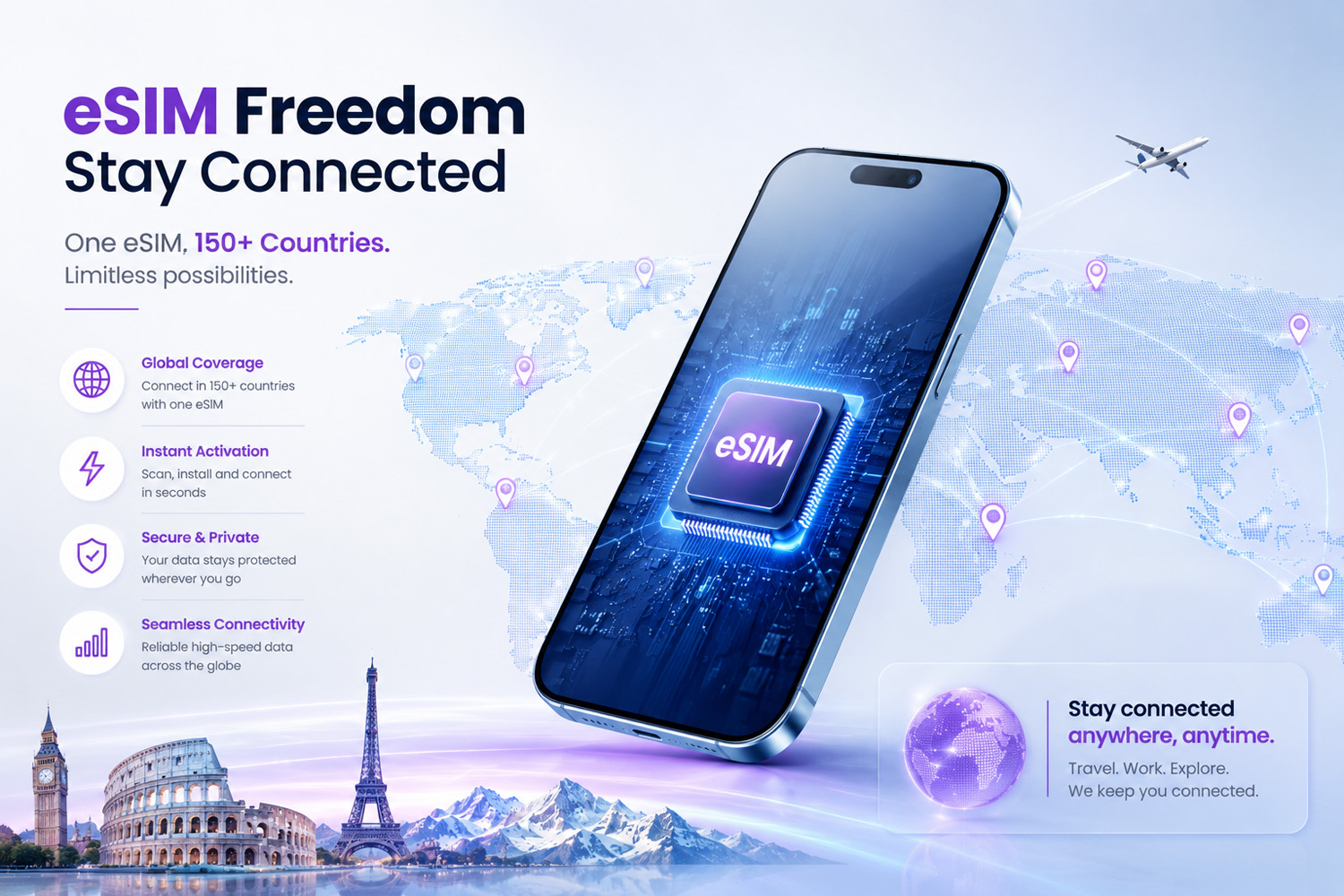
Learn what an eSIM is, how it works, how it compares to a physical SIM card, compatible devices, benefits, and why travelers are switching to digital SIM technology.
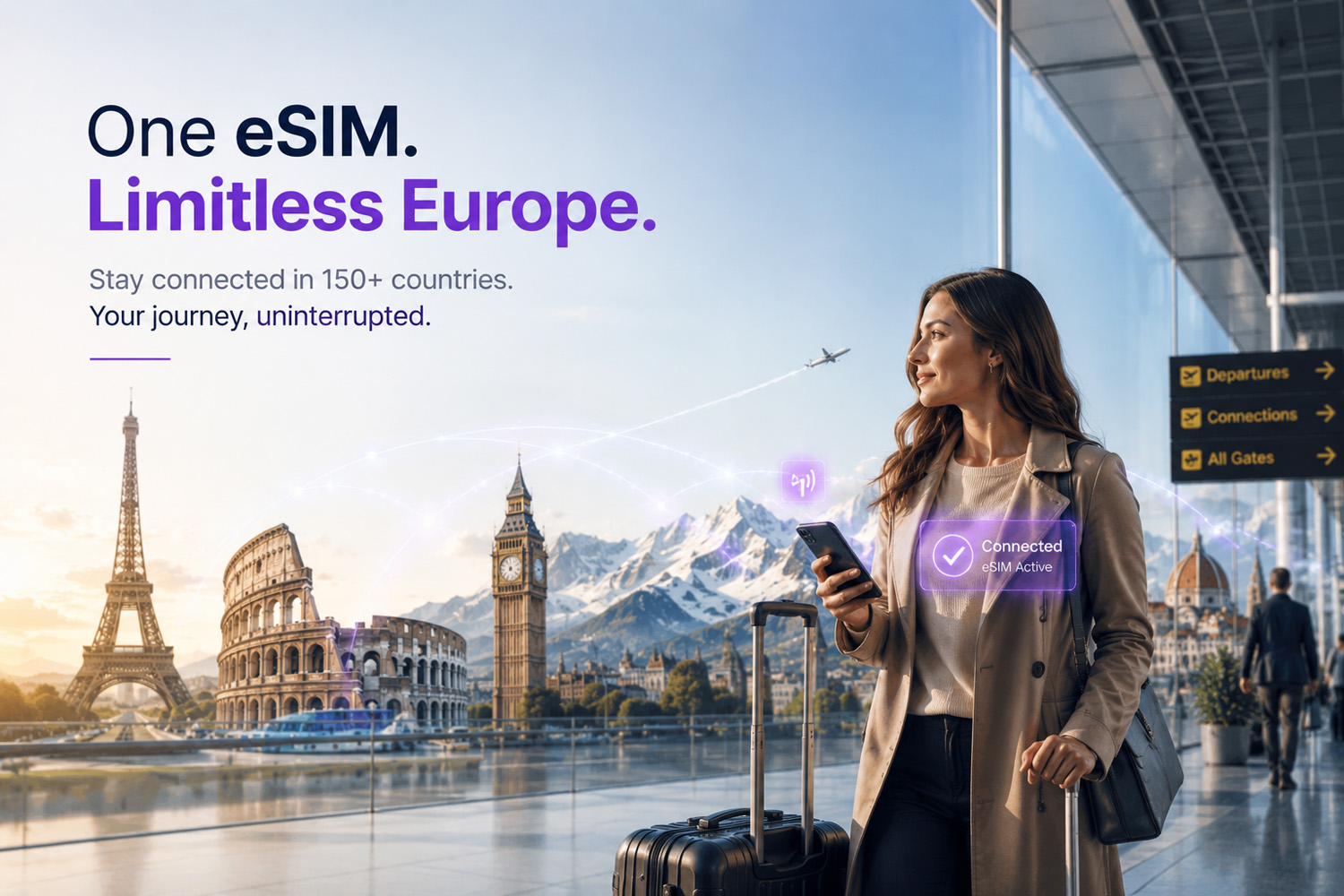
Planning a Europe trip? Discover how a Europe eSIM works, its benefits, supported countries, setup process, compatibility, and how to stay connected without expensive roaming charges.